Have you chosen to live differently, in a more economical and eco-friendly, lightweight home?
Are you planning to live in a tiny house and wondering about the laws governing alternative housing? Can you set up a tiny house on land that isn't zoned for construction?
1- ALUR Act: French law on lightweight housing
Living differently is no longer prohibited by law. Since 2014, the ALUR Act (Access to Housing and Urban Renewal), also known as Duflot II, has made it easier to access housing, particularly with regard to the establishment of alternative housing, and treats lightweight and mobile homes as permanent dwellings.
Living in lightweight, portable, and movable dwellings (yurts, teepees, trailers, tiny houses, etc.) is now possible.
But first and foremost, to be considered lightweight structures, they must meet certain requirements:
- They are installed and dismantled without the use of heavy machinery
- No component of the furniture or its interior design is fixed in place
- Connections to public utilities (water, electricity, and sewer) must not strain local government budgets
- Residents must ensure that the premises are kept clean, sanitary, and well-maintained to prevent fires.
2 – Parking and regulations
These tiny houses do not require a building permit.
If the tiny house is placed on a property for more than three months, you simply need to file a preliminary declaration with the town hall (if the floor area exceeds 20 square meters, you will need to apply for a building permit, but tiny houses generally do not exceed 20 square meters).
Where can these small homes be placed? Is it permitted to place a tiny house on land zoned for non-residential use?
These days, owning a piece of land doesn’t mean you have the right to build on it freely. Let’s take a look at the differences between buildable and non-buildable land:
When the land is zoned for residential development:
A tiny house can be built on a building lot without any problems.
With regard to sewerage zoning, homes located in areas with a public sewer system must connect to the public sewer system for wastewater treatment. Homes located in areas with individual sewerage systems must install an on-site wastewater treatment system. The local government is required to verify that the installation complies with regulations.
A plot of land is considered buildable if it is either already connected to utilities or can be connected to them (electricity, telephone, and water). However, there is no requirement for any dwelling to be connected to these utilities.
In theory, alternative housing can only be built on land zoned for construction, but the ALUR law makes a special provision for lightweight housing and allows for exceptions regarding the placement of a tiny house on land not zoned for construction.
When the land is not zoned for residential use:
Land not zoned for residential development, often referred to as "recreational land," includes agricultural and natural areas:
In agricultural zones, only structures necessary for farming are permitted. Only farmers may build their own homes.
Natural and forested areas are protected areas, so it is not possible to build a home there.
However, under the ALUR law, these non-building lots may be permitted to accommodate temporary structures provided they are located within designated zones.
These zones are designated as non-building areas reserved for mobile homes (lightweight and portable).
So yes, it is permitted to place a tiny house on land zoned as non-building land. Therefore, you can only keep your portable/mobile home there year-round if the non-building land is a designated plot.
Each municipality defines its designated zones in its local urban planning document (PLU), but it is possible that a municipality has not updated its urban planning documents. Before starting your project, contact your local town hall for more information about its PLU.
The Hameaux Légers association’s treasure map shows the tolerant towns that would welcome your lightweight housing project.
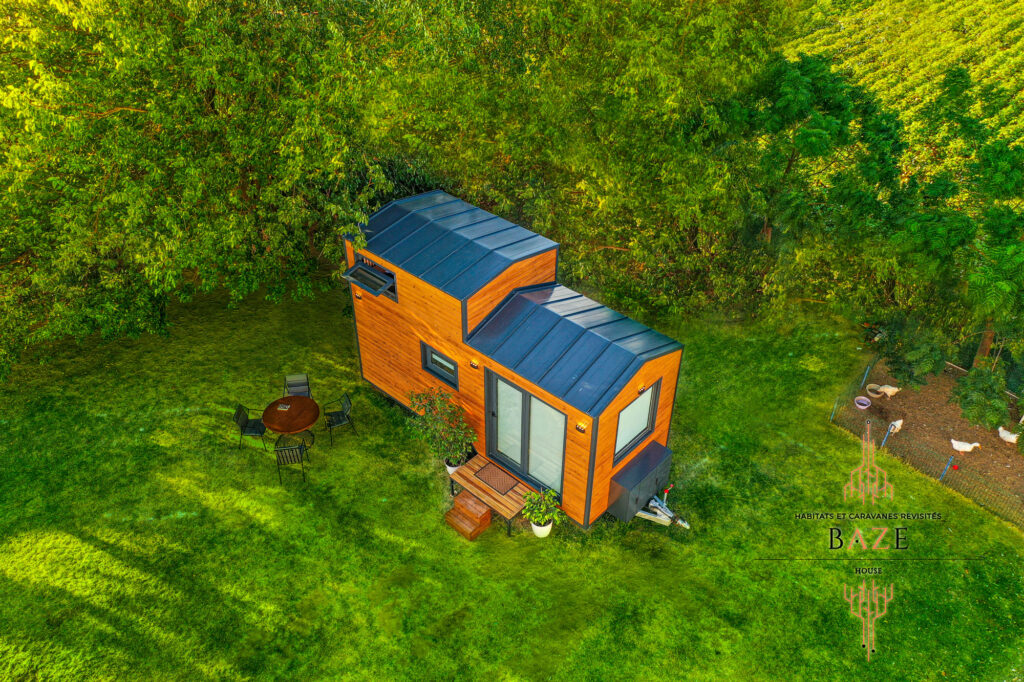
Now you know everything there is to know about the regulations governing the placement of tiny houses on both non-building and building-zoned land. Need some inspiration? Check out our projects


I love the idea of a tiny house on land that’s not zoned for construction! It shows that you can live responsibly and sustainably while still enjoying nature. Do you have any advice on how to make sure everything complies with local regulations?
It’s fascinating to see how small houses can be built on land zoned for non-residential use! It opens up new possibilities for living a minimalist and sustainable lifestyle. I’d love to learn more about the legal challenges and the solutions found for these projects!
I love the idea of a tiny house on land that’s not zoned for construction! It’s a great way to live more minimally while still complying with regulations. I’d love to hear more about the challenges you faced during construction and the benefits you’ve gained from it.
What an interesting take on tiny houses! I never realized how creative people can be when it comes to land that can’t be built on. It’s inspiring to see alternative solutions and think outside the box. I’d love to hear more about the specific challenges involved and how to navigate zoning laws!
This is such an interesting take on tiny living! I never thought about the potential of using land that isn’t zoned for construction for a tiny house. It’s inspiring to see creative solutions to housing challenges. Thanks for sharing your insights!